Safety performance:-
Safety performance of an organization is an absolutely reliable manifestation of the quality of management.
Good safety performance:-
- Good management.
- Efficient operation.
- Good quality.
- Minimal losses.
- Good profits.
- High employee morale.
- Good will/ Good public image.
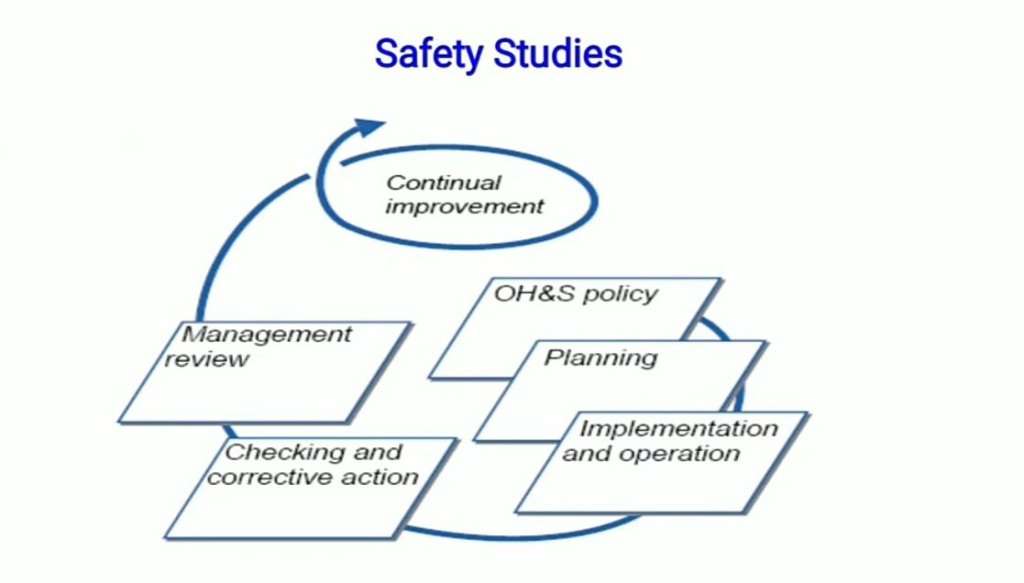
Safety studies:-
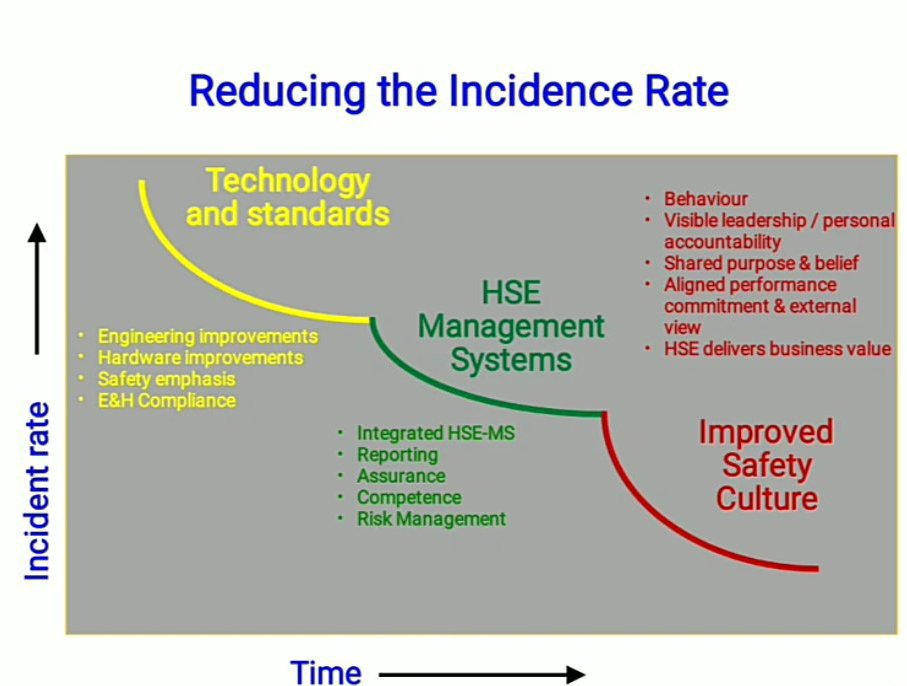
Reduce the incidence rate:-
Indicators of safety performance commonly used indicators are:-
- Frequency rate (FR).
- Weighted frequency rate (WFR).
- Severity rate (SR).
- Incident rate (IR).
- Frequency severity indicator (FR).
- Safety score.
- Cost factor.
- Cost severity rate.
- Activity rate.
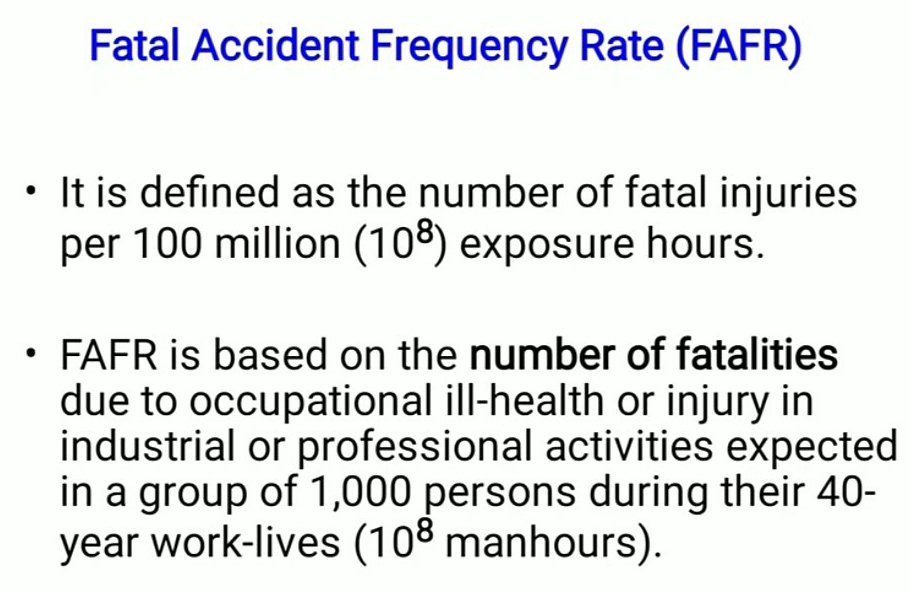
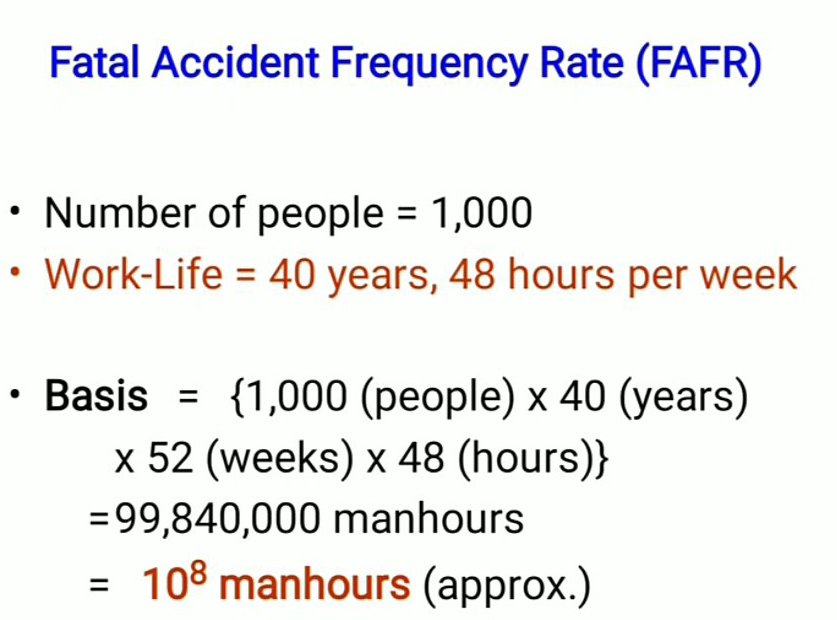
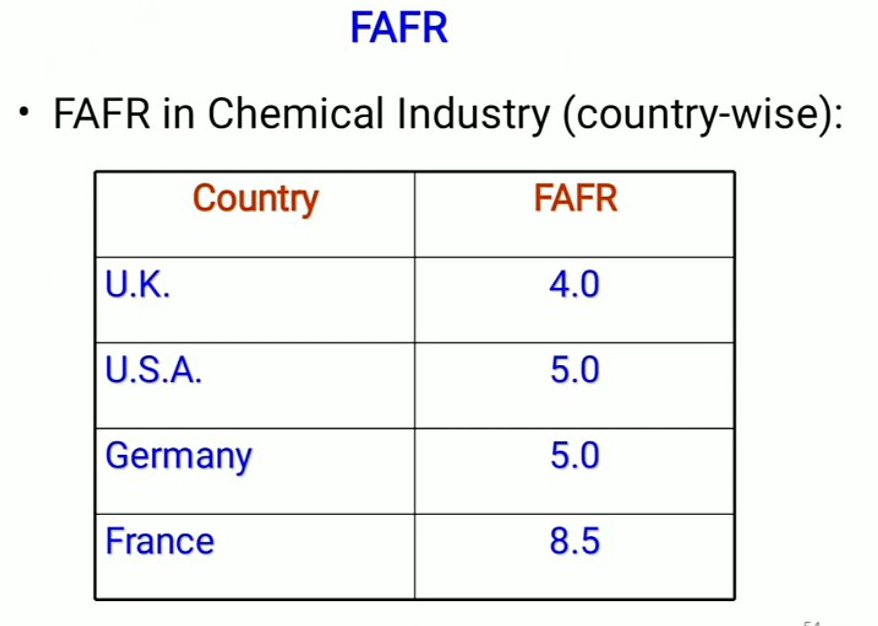
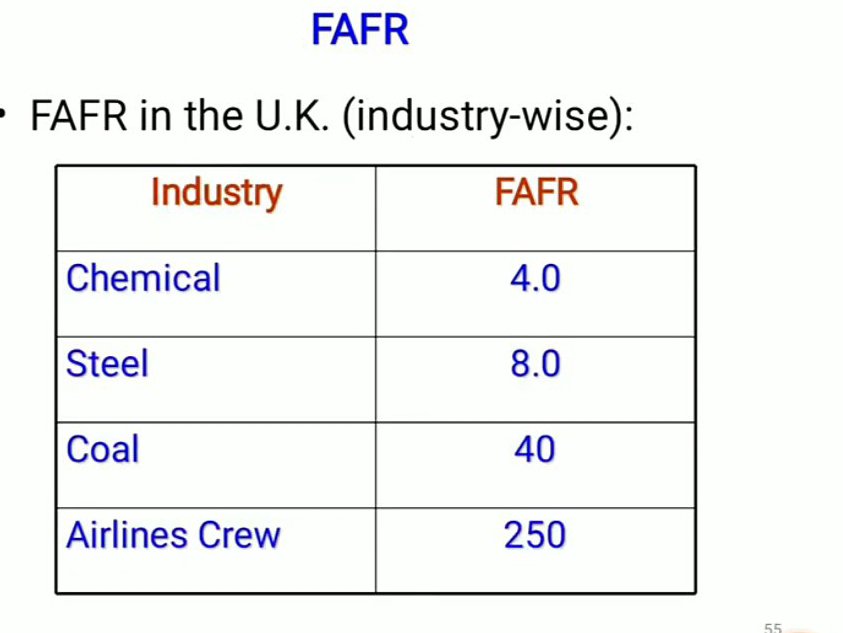
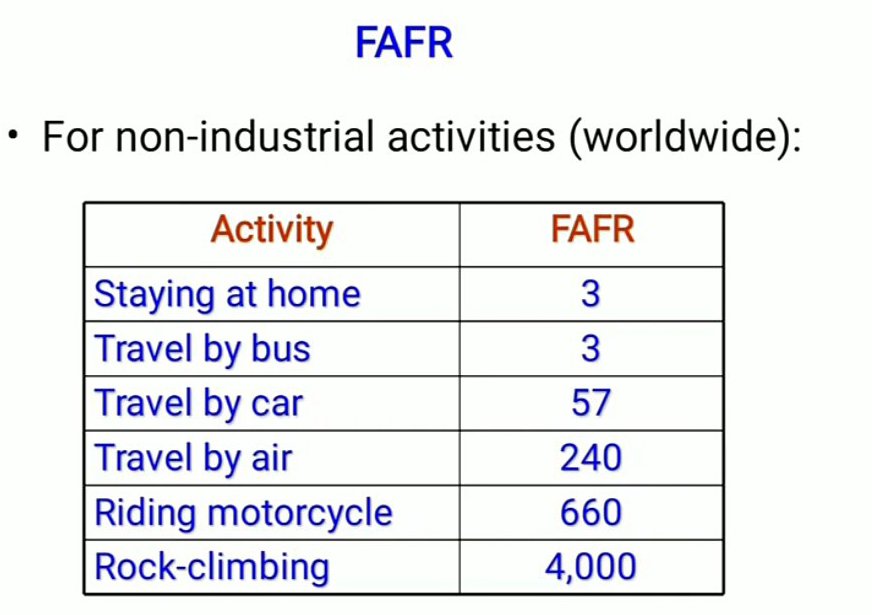
- Fatal accident frequency rate (FAFR).
Indian standard IS – 3786:1983 silent features :-
The Indian standard IS – 3786 is titled ” method for computation of frequency and severity rates for industrial injuries and classification of industrial accidents “.
Originally issued in 1966; revised in 1983. Main objective is appraisal of the progress of an accident prevention campaign.Comparison of safety performance.
Scope:-
- The standard prescribes basic methods for classification and recording industrial accidents.
- Methods for computation of FR,SR,IR of injuries.
- Adoption of a uniform system of recording events associated with work injuries.
The standard deals with:-
- Definition of terms.
- Computation of FR,SR,IR.
- Scheduled charges for disabilities.
- Classification of accidents.
- Assessment of work injuries and special cases.
The Indian standard has two appendices :-
- Appendix A
- Appendix B
Appendix A:-
Deal with the schedule changes for disabilities.
Part A :- Total disablement.
Part B :- partial disablement.
Appendix B :-
Serves as a guide for classification of accidents.
Classification of accidents according to IS – 3786:1983(Appendix B):-
Accidents have been classified into 7 categories according to Appendix B :-
- B-1:- Agency ( eg. Lathe machine, hammer etc) through media tools and machinery.
- B-2:- Unsafe mechanical or physical conditions, electrical cable obstructing the path way.
- B-3:- Unsafe act ( eg. Working without a valid work permit ).
- B-4:- Unsafe personal factor ( eg. Epilepsy,lack of skill) new person with out experience who entered into organization given the critical task to handle.
- B-5:- Type of accident ( slip,trip,fall,hit by falling object etc).
- B-6:- Nature of injury ( concussion, laceration, fracture etc.).
- B-7:- Location of injury (head,hand,leg etc).
- Unsafe condition:- electrical cable obstructing the path way.
- Unsafe act:- Working without valid work permit system.
Terminology:-
Accident:- An unintend occurrence arising out of and in the course of employment of a person resulting in injury.
An undesired event rise to death,ill health, injury, damage, or other loss (OHSAS 18001:1999) The revised standard OHSAS 18001:2007 uses the term “Incident” which includes the term “accident”.
An unplanned,not necessarily injurious or damaging event that interrupts the completion of an activity.
Accident:-
- Includes any undesirable circumstances which give rise to :-
- Ill health or injury.
- Damage to property,plant, products.
- Damage to environment.
- Production losses.
- Increase liabilities.
Incident:-
It is an undesired circumstance or s near miss which has the potential to cause accident.
Work related events in which an injury or I’ll health ( regardless of severity) or fatality occured or could have occured (OHSAS 18001:2007).
Note:- An accident is an incident which has given rise to injury,ill health or fatality.
Note:- An incident where no injury,ill health or fatality occured may also be referred to as a ” near miss” ” near hit” ” dangerous occurrence”.
Note:- An emergency situation is a particular type of incident.
Manhours worked ( Exposure Hours):-
- The total number of employee,hours worked by all employees working in the industrial premises.
- It includes managerial, supervisory, professional, technical, clerical and other workers including contract workers.
- It includes overtime work.
Death:- Fatality resulting from an accident disabling injury (lost- time injury).An injury causing disablement extending beyond the day or shift on which the accident occured.
Non disabling injury:- An injury which requires medical treatment only, without causing any disablement whether of temporary or permanent nature.
Reportable disabling injury ( Reportable lost time injury):-
An injury causing death or disablement to an extent as prescribed by the relevant statement.It is the absence of 48 hours or more from work due to occupational ill health or injury.
Non Reportable disabling injury (Non reportable lost time injury):-
An injury causing disablement extending beyond the day or shift on which the accident occured,but not exceeding 48 hours.
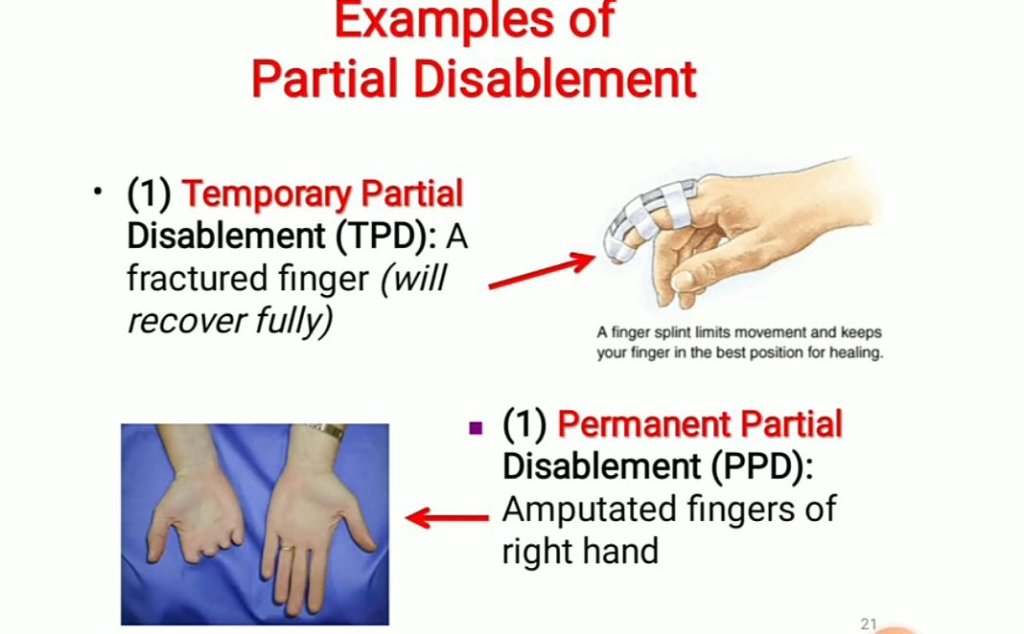
Partial disablement:-
It reduces the earning capacity of the injured person in the employment in which he was engaged.
It can be two types:-
1) Temporary partial disablement (TPD).
2) Permanent partial disablement (PPD).
Examples of partial disablement:-
Total disablement:-
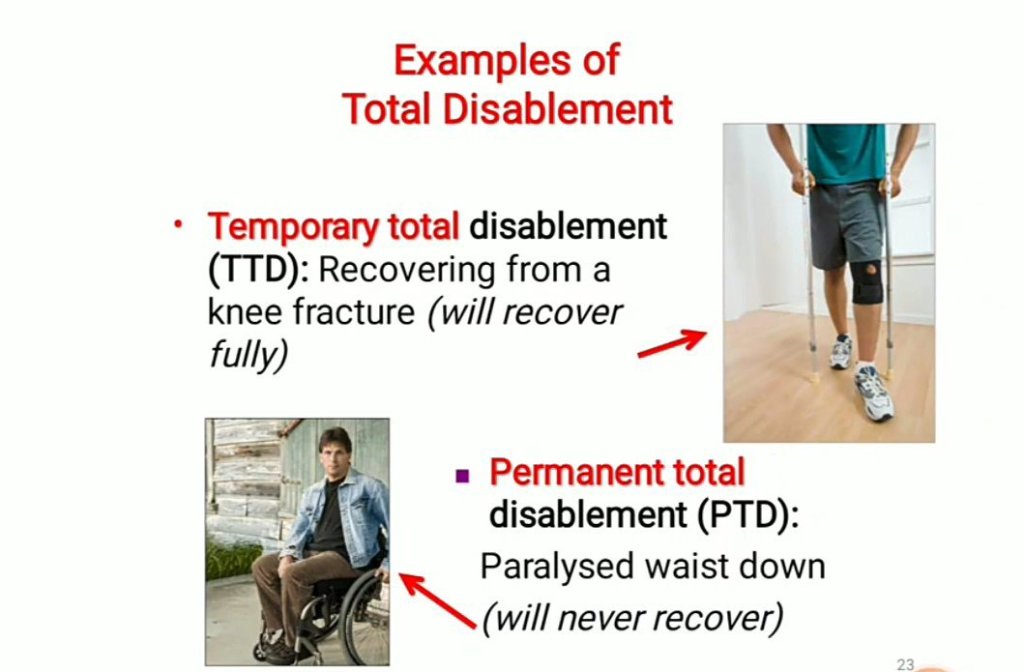
It incapacitates the worker for all work which he was capable of performing. It reduces the earning capacity of the injured person in the employment in which he was engaged. It can also be of two types.
1) Temporary total disablement (TTD).
2) Permanent total disablement (PTD).
Examples of Total disablement:-
Days of disablement ( Lost time):-
In the case of disablement of temporary nature,the number of days on which the injured person was partially disabled.In the case of death or disablement of permanent nature,whether partial or total disablement,the mandays lost means the charges in days of earning capacity lost due to such permanent disability or death.
In other cases the day on which injury occured and the day the injured person returned to work are not to be included as mandays lost, but all intervening calender days including Sundays ND off days ,the plant shut downs are to be included in the mandays lost.
Scheduled charges:-
Charges in days of earning capacity lost due to permanent disability or death.
Other references:- workmen’s compensation Act 1923 also defines following terms.
- Partial disablement of temporary nature or permanent nature, total disablement ( temporary or permanent ) wages and workmen.
- Section 4 and schedule 1 and 4 are important for calculating the amount of compensation. A concept of relevant case factor was added with effect from 1-7-1984. Section 4 was amended with effect from 15-9-1995 raising the limits of compensation. The employees state insurance Act should also be referred where it is applicable. It also contains the similar terms and schedules.
Near miss:- It means any unplanned sudden event that could have cause injury to man, materials,plant, environment or could have involved a loss of containment possibly giving rise to adverse effect but not result in such accident.
If near miss is detected and prevented, possible accident due to that nearmiss can be avoided or prevented. If causes of near miss are not removed, they can result in accident. Therefore importance to identify and control nearmiss is more than that of controlling accident.
Restricted work case:- Restricted work case is when a person is so injured that they cannot perform their work normal duties. Therefore they are transferred temporarily to some other jobs like light duties.
First-aid refers to medical attention that is usually administered immediately after the injury occurs and at the location where it occurs. It often consists of a one-time, short-term treatment and requires little thersold or training to administer medical.
First aid case:- First aid is the first and immediate assistance given to any person suffering from either a minor or serious illness or injury, with care provided to preserve life, prevent the condition from worsening or to promote recovery. It includes intial intervention in a serious condition prior to professional medical help being available, such as performing cardiopulmonary resuscitation (CPR) while waiting for an ambulance as well as the complete treatment of minor conditions,such as applying a plaster to a cut,A first aid is generally performed by someone with basic medical training.
Safety performance indicators:-
Frequency Rate(FR):-
Frequency rate may be defined as the number of injuries per million manhours worked.
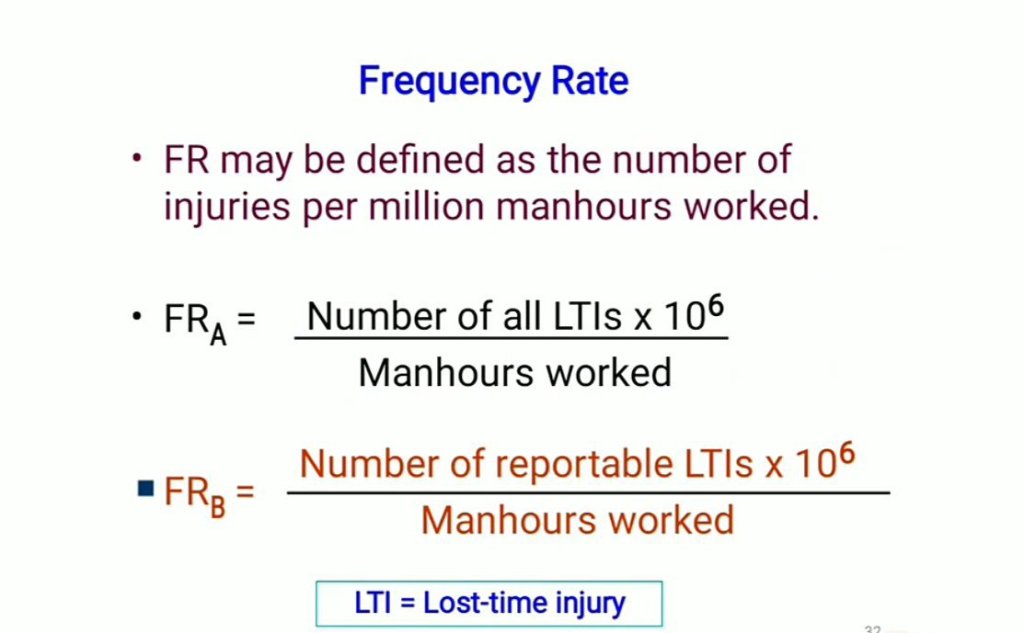
Note:- FRa is used for all reportable and non reportable injuries.
If the injury does not cause loss of time in the period in which it occurs but in a subsequent period, the injury should be included in the FR of the period in which the loss of time begins.
If an injury causes intermittent loss of time,It should only be included in the FR on I.e, when the first loss of time occurs.
Weighted frequency rate:-
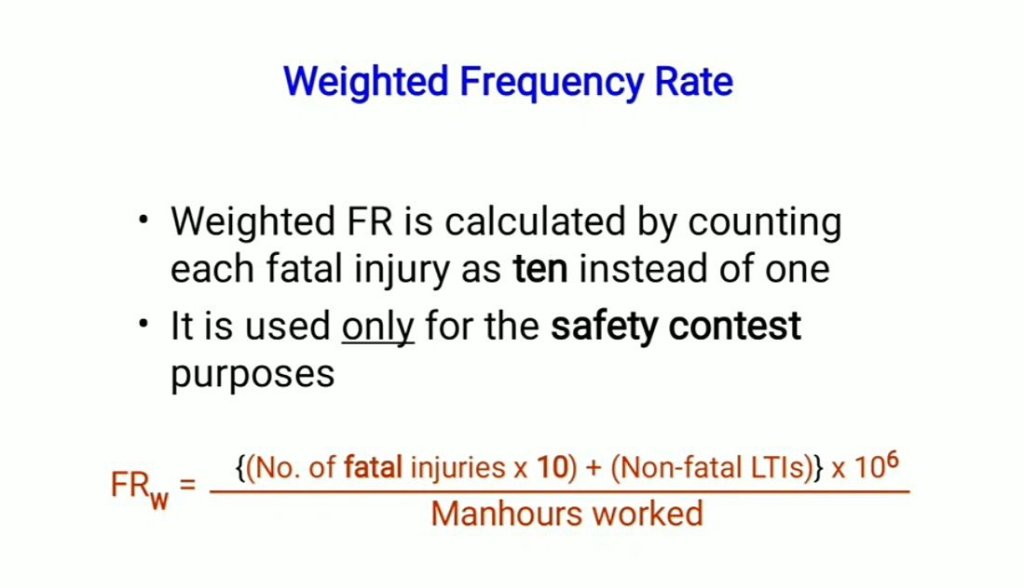
Weighted frequency rate is calculated by counting each fatal injury as ten instead of one . It is used only for the safety contest purposes.
Frequency rate trend:-
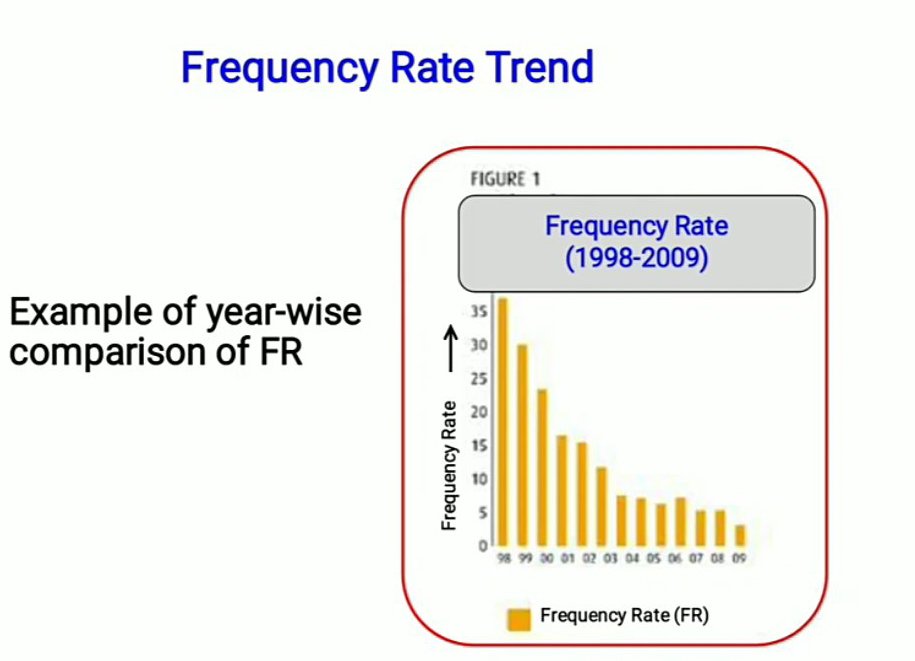
Examples of year wise comparison of FR. Frequency rate only tells us the frequency of occurrence of work injuries in a given time period usually a year. It doesn’t tells how severe were the injuries. Hence FR alone is not a good safety performance indicator.
Severity rate:-
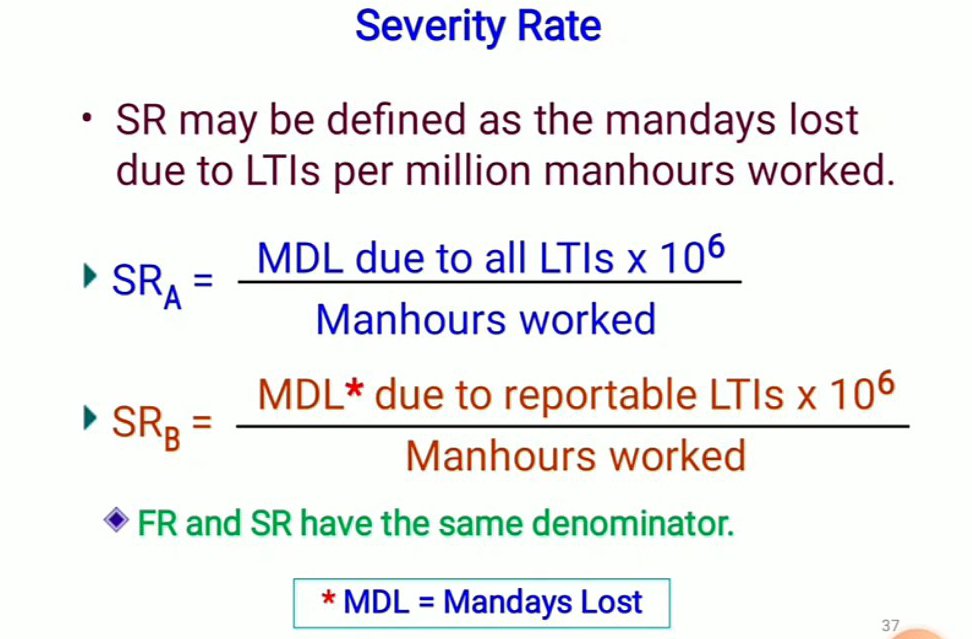
SR may be defined as the mandays lost due to LTIs per million manhours worked.
Calculation of mandays lost:-
Calculation of MDL should be based on :-
- Mandays lost due to TTD ( Temporary total disability). Or
- Mandays lost according to scheduled charges for death and permanent disabilities.
- Incase of multiple injuries, the sum of the schedule changes should not exceed 6000 mandays.
- Because 300×20= 6000 is equally to one fatality or one death.
Examples of TDP( Total permanent disablement):-
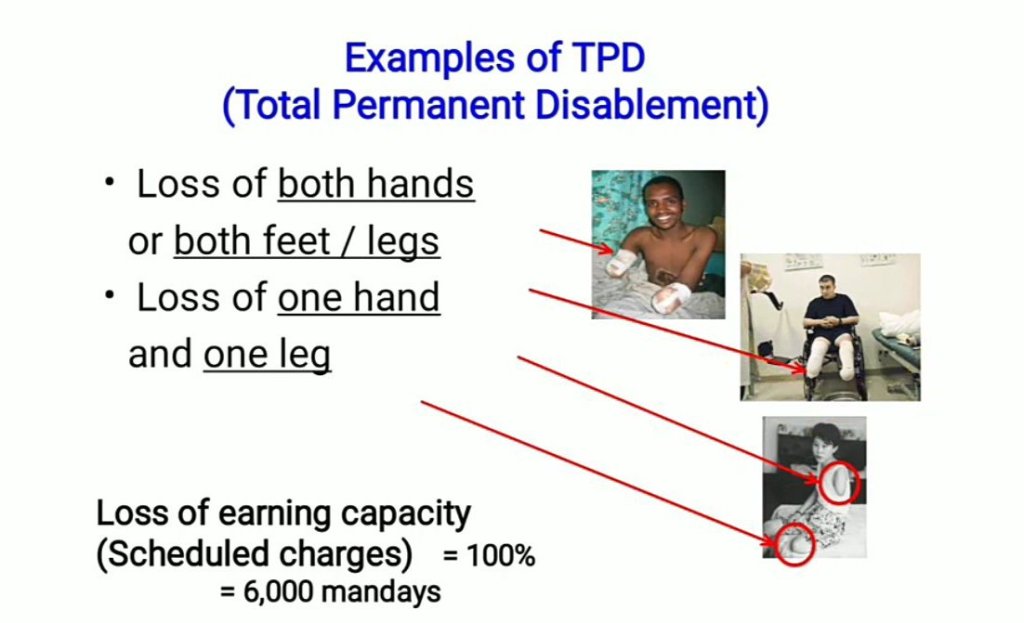
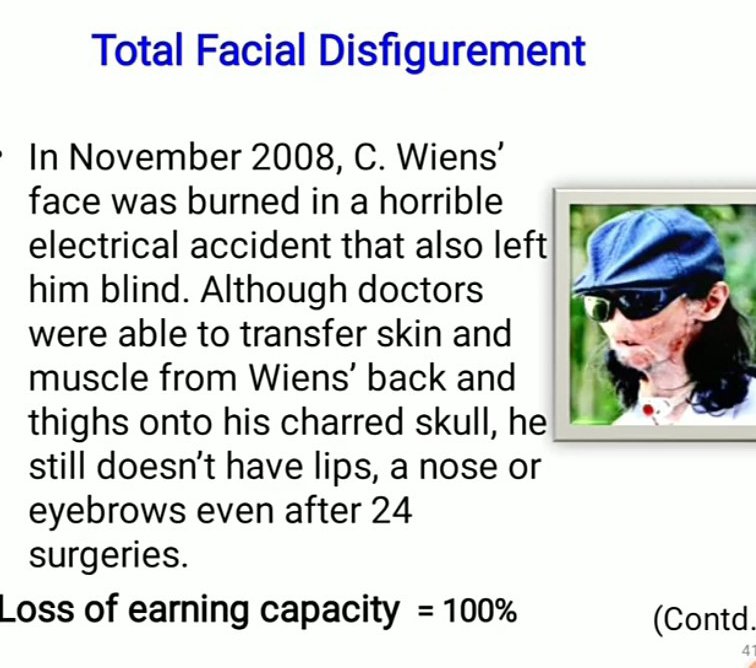
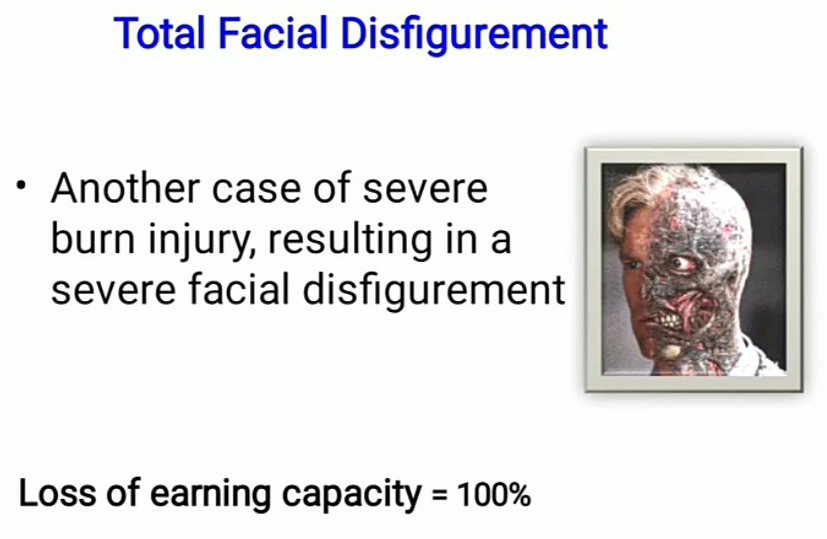
Total disablement :- ( 100% loss of earning capacity):-
- Death.
- Loss of both hands or amputation at higher sites.
- Loss of a hand and foot.
- Double amputation through leg or thigh or amputation through leg or thigh on one side and loss of other foot.
- Loss of sight of both eyes.
- Very severe facial disfigurement .
- Absolute deafness.
- Loss of both hands or both feet / legs.
- Loss of one hand and one leg.
- Loss of earning capacity (scheduled charges) = 100% = 6000 mandays.
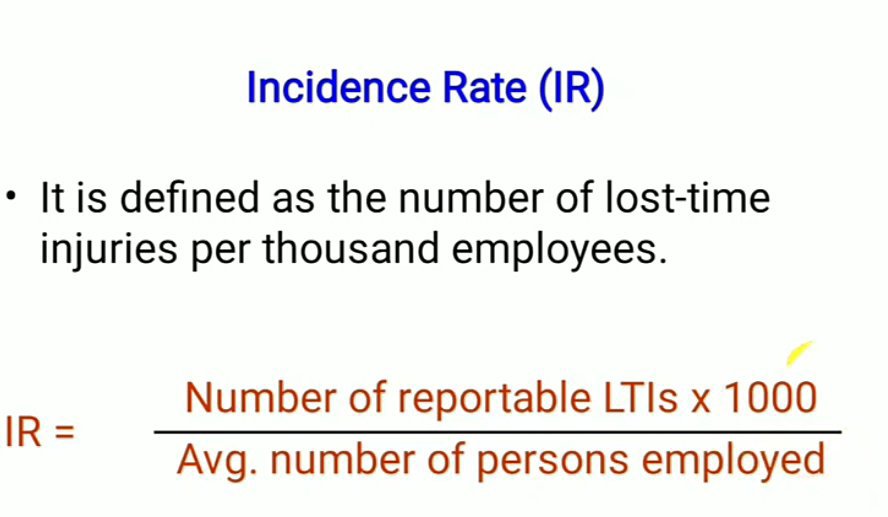
Incident rate(IR):-
It is defined as the number of lost time injuries per thousand employees.
Other rates:-
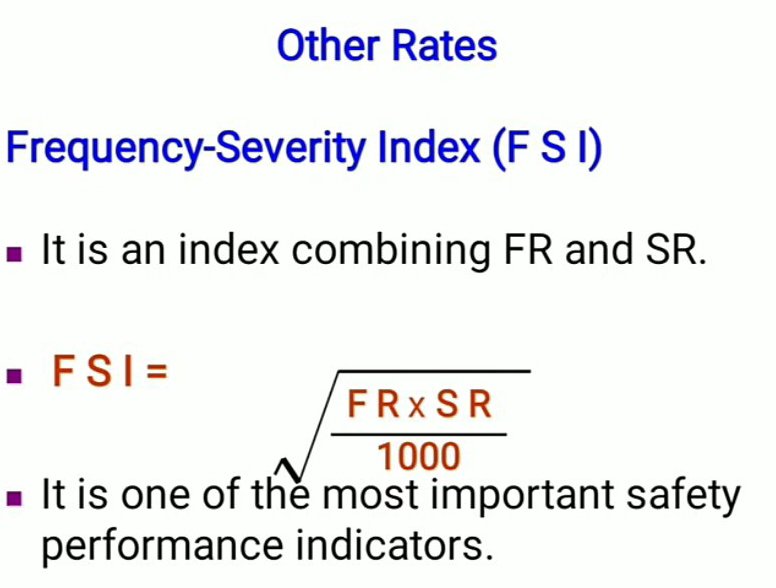
Frequency severity index (FSI):-
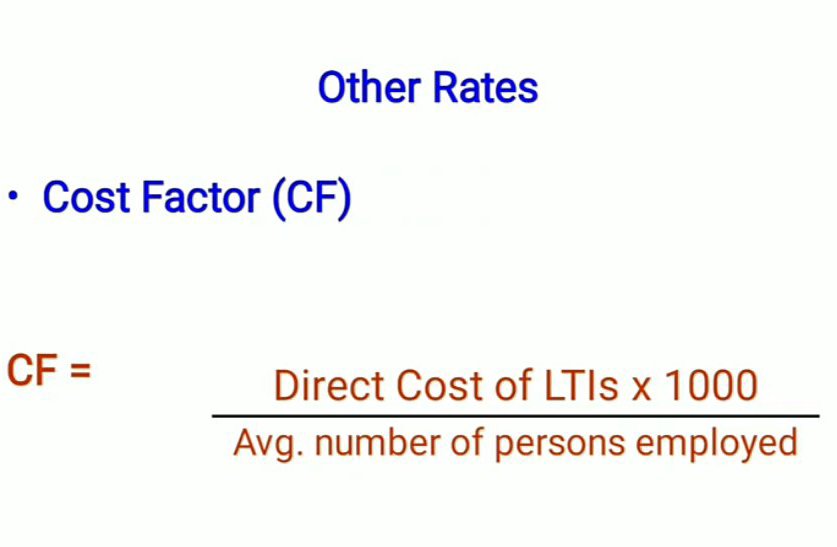
Cost factor (CF):-
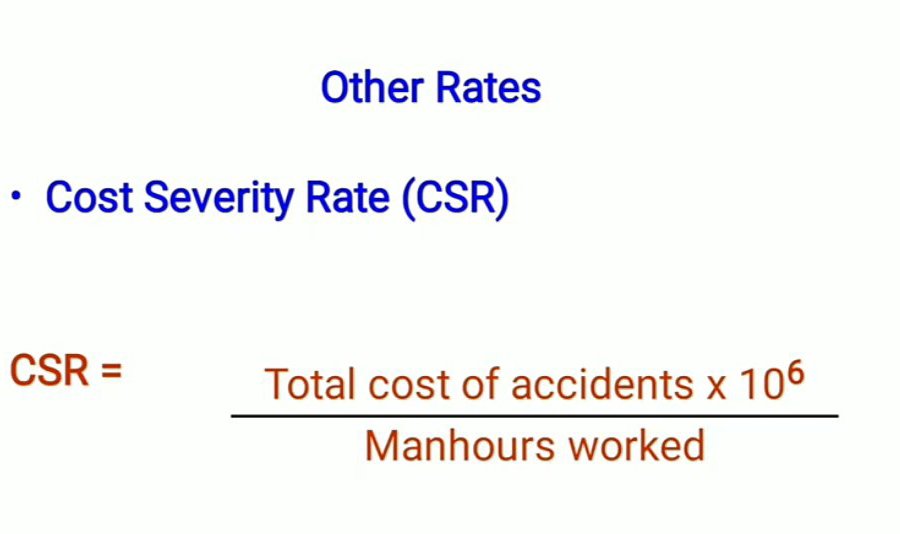
Cost severity rate (CSR):-
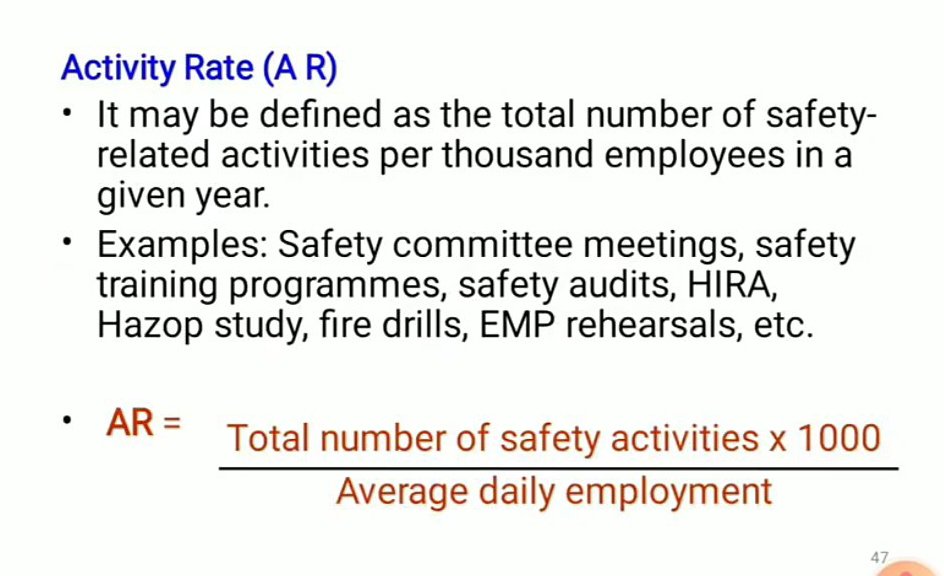
Activity rate (AR):-
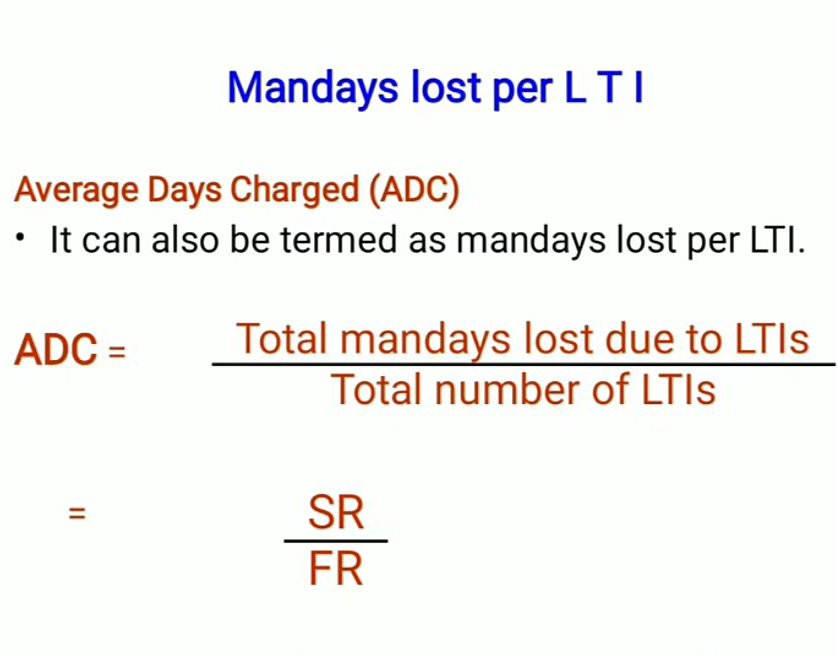
Mandays lost per LTI :-
Average days charged(ADC):-
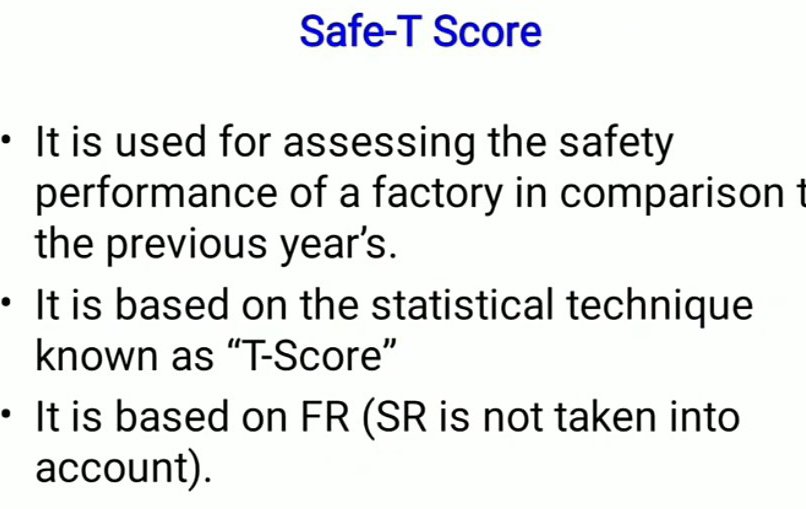
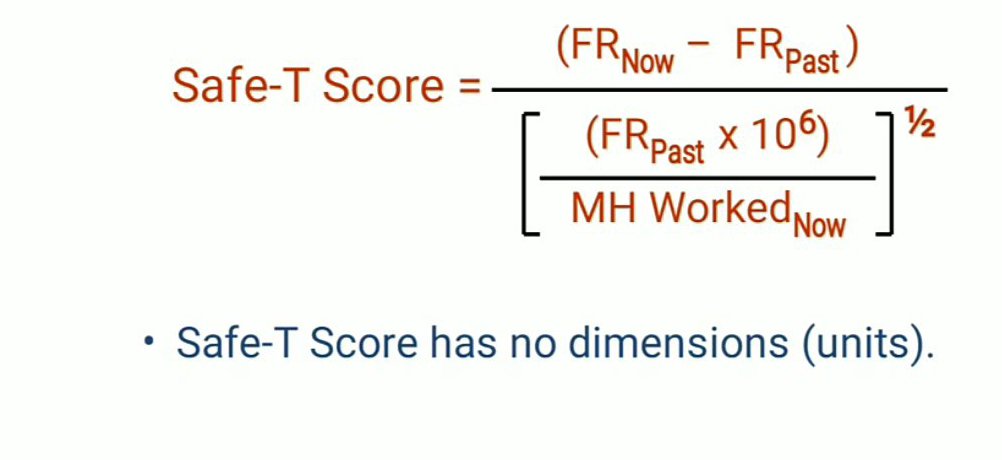
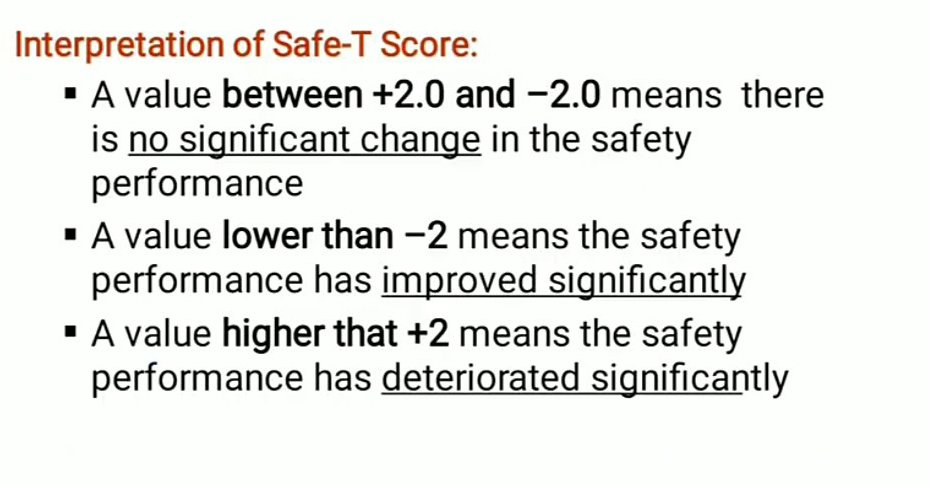
safe-T score:-